
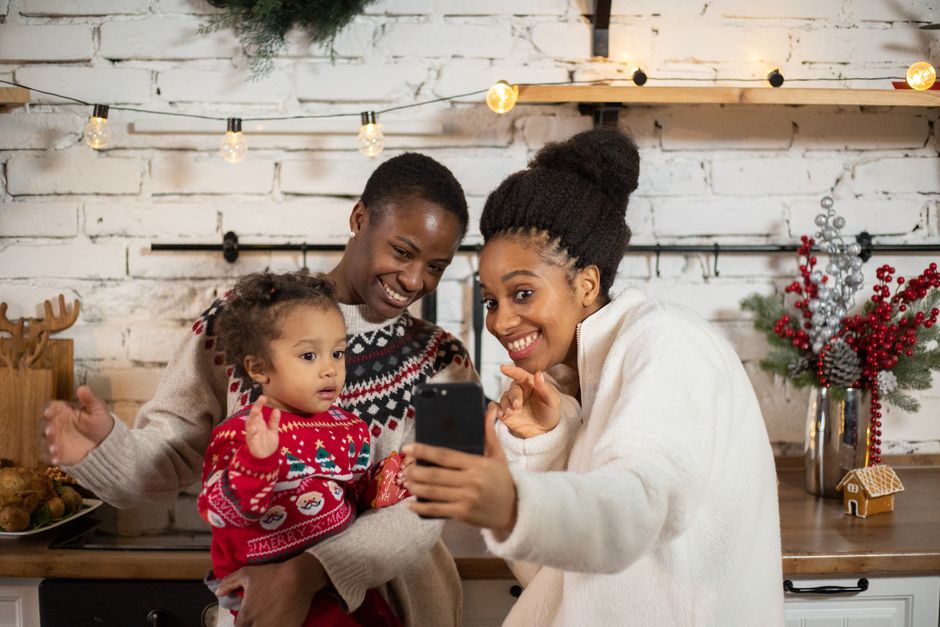
A five-minute rehearsal can help a child move from hiding off-camera to greeting Grandma in the English-and-Twi mix that feels natural. The goal is confidence in one small exchange, without correcting every word or demanding a perfect Twi performance.
Imagine Adwoa, an eight-year-old in London who loves drawing elaborate dresses and answers most family questions with one careful word. At 5:55 on Sunday afternoon, she is holding a purple pencil while her father props his phone against a mug. Grandma is waiting in Kumasi.
“Come and say hello,” he says.
Adwoa knows the opening. She practised it at breakfast. Yet when her father taps the call button, her shoulders rise and she slides below the camera.
If she stays there, Grandma will hear another explanation about shyness. Adwoa will miss the call she spent all week promising to join. Next Sunday, the greeting may feel even harder.
The sentence she could say as herself
Her father pauses the call before it connects. They have five minutes.
He avoids turning the moment into a language test. No lecture. No long list of vocabulary. He asks Adwoa what she actually wants to tell Grandma.
“I want to say good evening, ask how she is, then show her my dress.”
That becomes the rehearsal:
“Maadwo, Nana. Wo ho te sɛn? I drew something for you.”
It is a small sentence, but it sounds like Adwoa. The Twi carries the greeting and affection. English carries the detail she can explain without searching for words. She does not have to choose one language for the whole conversation.
That matters because code-switching often reflects how Ghanaian families already speak. A child may understand more Twi than they can produce under pressure. They may know the family rhythm but freeze when asked to perform it on command. Letting both languages sit in the same sentence gives them somewhere familiar to begin.
A private rehearsal before the family hears
With the call still paused, Adwoa’s father opens Nkomo. Before she speaks, he checks the cloud-consent choice and selects the option he wants for this rehearsal. Nkomo makes that decision explicit with three controls: never, ask each time, or this session.
He chooses “ask each time” and approves this exchange. He has also turned off on-device history, so the rehearsal is purged immediately rather than staying in local history.
Adwoa holds to speak.
“Maadwo, Nana. Wo ho te sɛn? I drew something for you.”
She hears a concise reply and tries again. This time, she does not stop after “Maadwo.” When she loses her place, she interrupts naturally and restarts from the English phrase she remembers.
The purpose is not to manufacture flawless pronunciation in five minutes. It is to let her hear herself complete the thought before several relatives are listening. That private first attempt lowers the weight of the public one.
A similar principle appears in private Twi and English voice-note rehearsal: practise the message in the language mix you would genuinely use, then decide when it is ready to leave your hands.
Keep the practice smaller than the fear
Adults often make a nervous child’s task bigger without meaning to. “Go and speak Twi with Grandma” can sound like an exam covering every word the child has ever forgotten.
A better rehearsal has three parts: one greeting, one easy question, and one thing the child genuinely wants to share.
For Adwoa, the drawing does most of the work. Once Grandma sees the silver crown and enormous yellow sleeves, the conversation has somewhere to go. If Adwoa cannot find a Twi word, she can point, laugh, or continue in English. Connection stays possible.
Parents can also resist correcting the first successful attempt. If the greeting is understandable and the child keeps talking, save the language note for later. Immediate correction can turn relief back into embarrassment. Confidence grows when a child discovers, “I can begin, and I can recover when I get stuck.”
Privacy should remain part of that preparation, especially when a rehearsal includes family names, health news, money, or other personal details. Check the cloud choice before speaking, decide whether local history should remain on, and use export or account deletion controls when needed. For a closer look at those choices, read which Nkomo cloud setting to choose before sharing personal details.
When Grandma appears on screen
At 6:00, Adwoa climbs back onto the sofa. The call connects.
For one beat, she looks at her father instead of the screen. The purple pencil is still in her hand.
Then she says, “Maadwo, Nana. Wo ho te sɛn?”
Grandma answers. Adwoa catches enough to smile, then lifts the drawing into view.
“I made this one for you.”
The conversation continues in the mix she can manage today. She does not deliver a speech. She does not suddenly become fearless. She stays on camera.
Before next Sunday’s call, choose one sentence your child truly wants to say. Practise it privately in Twi, English, or both. Then let the real conversation belong to them.
Comments
No comments yet.