
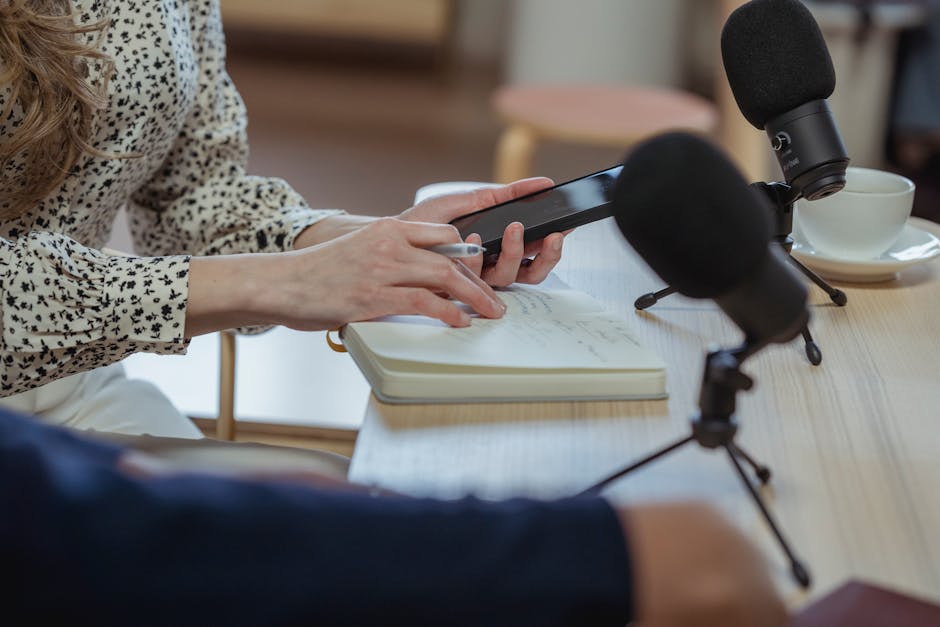
The third restart usually points to a design problem: the tool has failed to make room for the way you naturally speak. If a voice note works only after you flatten your Twi, slow down your Ghanaian English, or choose one language for the whole thought, the burden has landed on you.
You hold the phone close, begin the message, and stop halfway through.
The first attempt had the right opening, then the words shifted. “I’ll come after work, na mefa no bra,” came out as easily as it would in a family call. You delete it because the transcription or reply treated the switch as a mistake.
On the second attempt, you try to behave for the tool. More English. Shorter sentences. Less of the phrase you would normally use. It sounds stiff, and you delete that one too.
By the third try, the problem can look personal. Maybe I do not speak clearly. Maybe I should choose my words better.
But the repeated restart is useful evidence. The speaker is doing extra work to fit an interface that has made a narrow assumption about language.
A mixed-language thought should not need translation before it can be heard
Code-switching is often the most precise way to say something. A Twi phrase can carry warmth, emphasis, or a shared understanding that a polished English substitute loses. Ghanaian English does the same work in the other direction, especially when a thought moves from family context to practical detail.
Forcing one language per turn creates a small but constant tax. You plan your sentence around the tool. You edit before you speak. You keep restarting.
Nkomo is built for natural Twi and Ghanaian English conversation by text or voice, including the mix people actually use. Hold to speak, say what you mean, interrupt if the reply is heading in the wrong direction, then continue the conversation. The aim is simple: keep the thought intact long enough for the conversation to be useful.
That matters for a quick message about a parcel, a family plan, or a detail that has to stay exact. In The English-to-Twi Switch in Your Voice Note, and What Rewriting It Can Flatten, the risk becomes clear: rewriting a switch can change more than the words.
Apollo 13 had a mismatch problem, not a crew problem
In April 1970, the Apollo 13 crew faced a rising carbon dioxide problem after the mission moved into the lunar module. The command module had square lithium hydroxide canisters. The lunar module used round openings. The available cartridges could not simply be fitted together.
The astronauts were not asked to breathe differently. Engineers on the ground had to work with the parts already on the spacecraft and devise an adapter so the square cartridges could be used in the round system. The outcome was uncertain while the crew was in flight. NASA’s Apollo 13 mission history documents the improvised solution and the crew’s safe return.
The shape of that problem matters here. A square cartridge and a round opening are both valid components. The failure sits in the connection between them.
Twi, English, and the natural switch between them are valid too. When a voice product handles each language separately but breaks at the handoff, the user may blame their accent, pacing, or vocabulary. The more accurate diagnosis is often a design mismatch.
The third restart hides a cost
One deleted note does not look serious. Three restarts in a row can make someone give up on voice entirely.
That cost grows when the conversation is sensitive. You may want to ask a private question, work through an idea out loud, or send a message without leaving more information in the cloud than you intended. Language support and privacy controls belong in the same conversation because both affect whether people speak freely.
Nkomo makes the cloud choice explicit: never, ask each time, or this session. History stays on the device under your control, and turning it off purges it immediately. You can export your data or delete your account in one tap. When something fails, the app shows the error instead of swallowing it.
Those details do not remove every awkward moment. They give you clear choices when one occurs.
Design for the way people recover
A good voice experience does not assume every sentence arrives perfectly. People interrupt themselves, correct a date, switch languages halfway through a thought, and start again because the message matters.
The right recovery is not another performance of “proper” speech. It is a tool that lets you continue from where the meaning is still alive.
Apollo 13’s adapter did not change the cartridge or the opening. It made the existing parts work together under pressure. Voice tools for Ghanaian speakers need the same humility: listen to the language people already use, then design the connection carefully.
Next time you delete the same note twice, pause before blaming your voice. The third restart may be telling you exactly where the product needs to meet you.
Comments
No comments yet.